
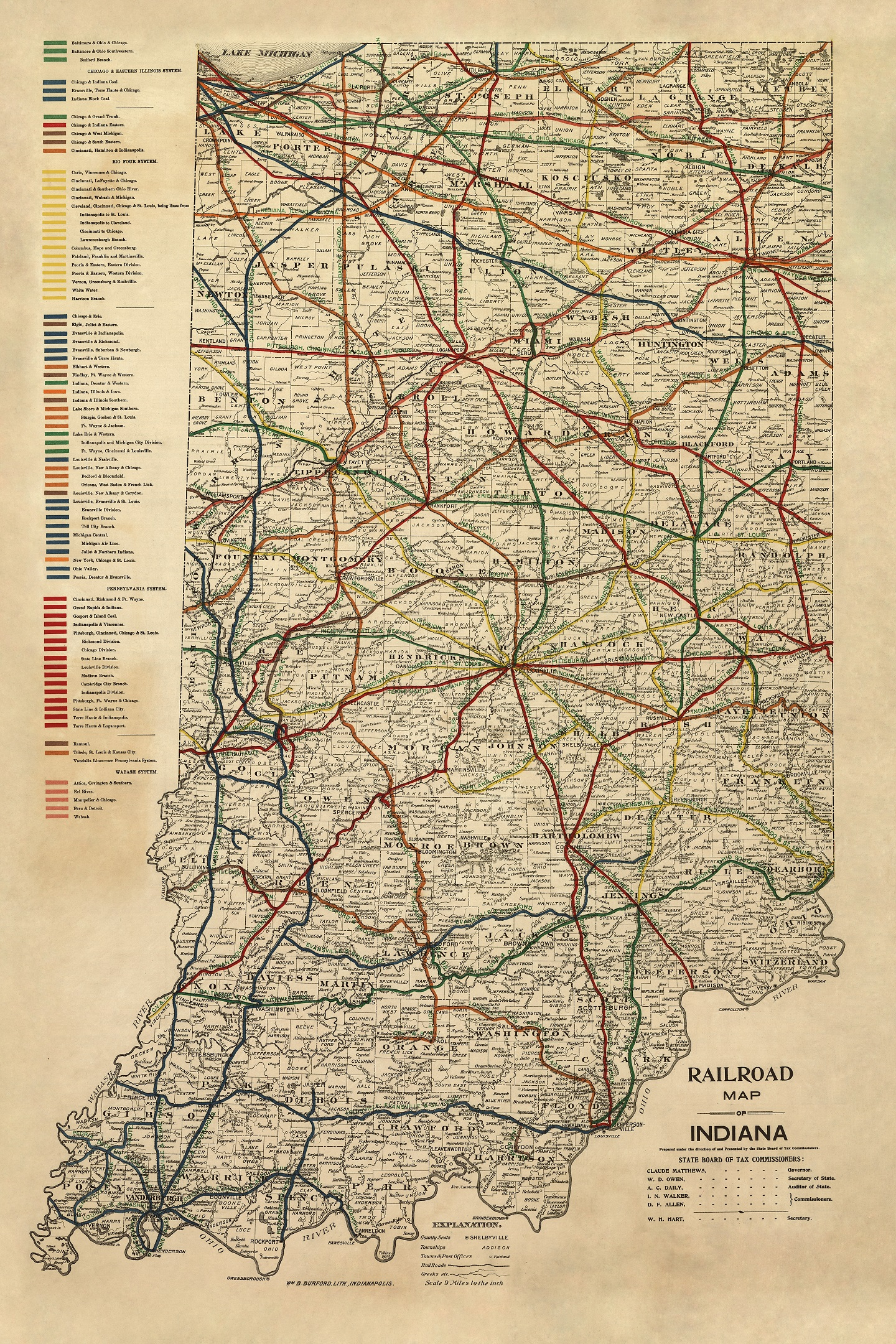
As the game mechanics started to take shape, I found myself diving deep into research to give the represented railroads a solid historical foundation. One book proved especially valuable: Railroads of Indiana by Richard Simons and Francis Parker.
The book walks through the rise, expansion, and eventual decline of Indiana’s rail network, organizing it into five distinct eras. I merged the first four eras into three game phases that still capture the essential evolution
– Creation (1840‑1870) – the birth of the railroad lines
– Expansion (1870‑1900) – rapid growth and competition
– Domination (1900‑1950) – consolidation and peak influence
I omitted the post‑1950 era because the nationwide collapse of rail traffic doesn’t match the optimistic, network building focused tone I wanted for the game.
Components & Cost Savings
Early on I liked the feel of real wooden rails, but commercially available 25 mm sticks were pricey (about $0.10 each when bought in bulk) and a bit too long for the game’s hex grid. Switching to 3D printed 22 mm rails brought the cost down to roughly $0.02 per piece. That saving allowed me to add a fifth player without inflating the budget and increase the total track supply for a larger network.
Turn Structure
The sequence of play has gone through many iterations, but it now settles into three phases each turn
1. Charter Phase – New railroads are launched; struggling ones may go bankrupt.
2. Railroad Phase
– Independent (bot‑run) railroads expand their networks first.
– Players then take actions: build track, generate revenue, and adjust stock prices.
3. Merger Phase – Players bid in an open auction to merge their railroads with available independents.
Historical Incentives
During the 19th century, Indiana railroads pursued two main objectives
– Link the Ohio River to the state’s costly canal system, later shifting toward connections to ports on the Great Lakes.
– Reach the booming western hubs of Chicago and St. Louis.
To nudge players toward these historic goals, I added tiered rewards for the first, second, and third player who connects to a western city, either a cash bonus or a stock‑price increase. This creates a race that reflects the real world push for westward expansion while keeping the game’s focus on fun, strategic network building.
I’ll likely continue this in a Part 3 after some design revisions I have planned.